
COMMITTEES
GAs & ECOSOCs
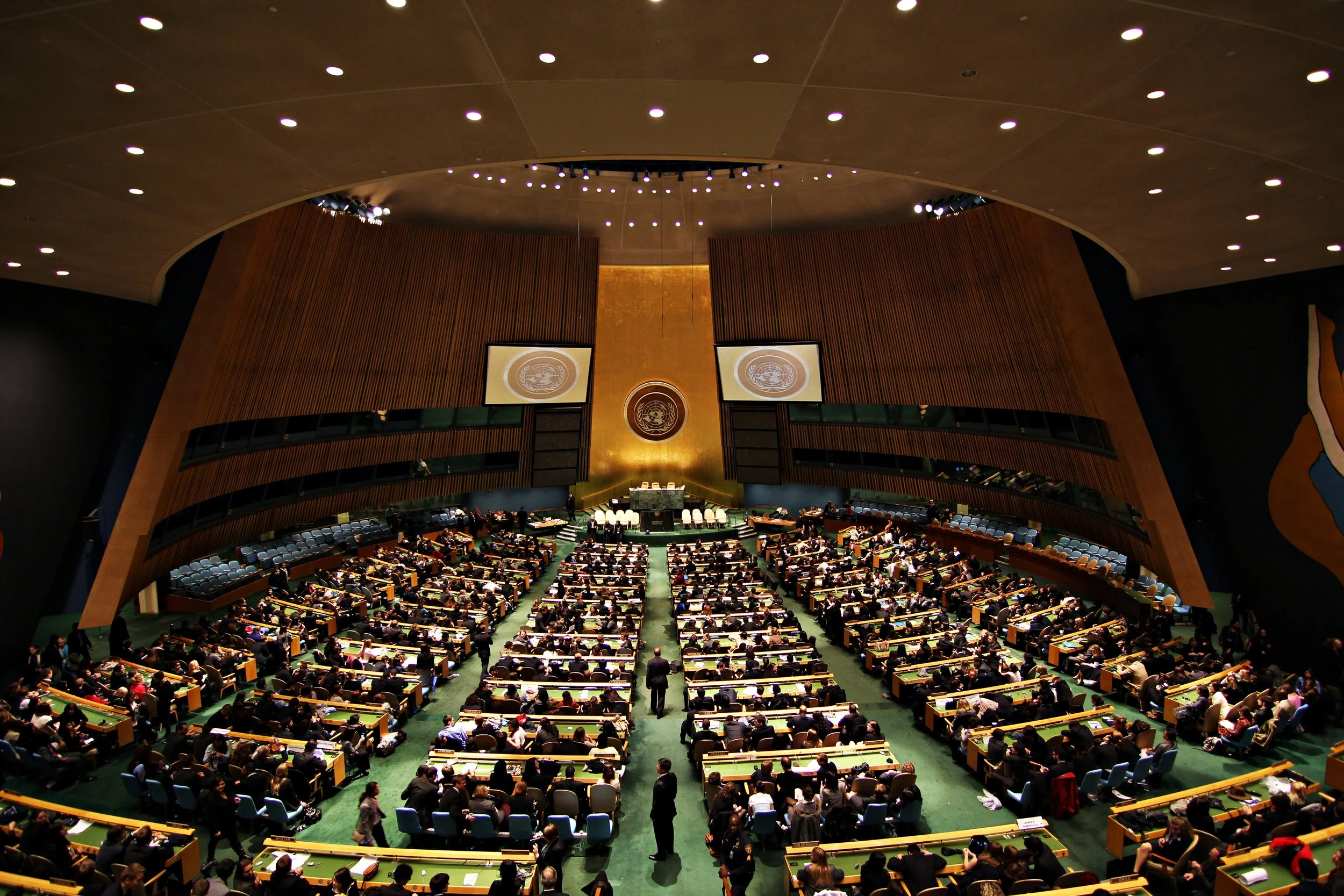
Our GA & ECOSOC committees are perfect for delegates looking to debate in a larger setting. General Assemblies (GAs) are expected to host 60 to 80 delegates, whereas Economic & Social Councils (ECOSOCs) are expected to host 50 to 70 delegates. All committees have expert chairs trained to give all delegates feedback and foster a dynamic, yet educational committee experience.
-
Director: Talia Philip
Topic 1: Security vs Freedom: State Surveillance, National Interests, and Civil Liberties in the Age of AI
Recent advances in digital surveillance technology and machine learning are progressively altering how states pursue national security. Artificial intelligence–enabled tools such as facial recognition, biometric databases, predictive policing algorithms, and mass metadata collection are increasingly deployed to combat terrorism, transnational crime, and cyber threats. These tools do promise greater efficiency and preventive capacity; however, to what extent do these defenses themselves become weapons. Especially in periods of crisis, such as public health crises or national security threats, emergency surveillance measures enacted often erode personal liberties and data privacy, yet persist long after warranted, without adequate legal oversight or transparency. Further, several states export AI surveillance technologies to nations with weak regulatory frameworks, frequently during times of domestic political unrest. As these surveillance capabilities become cheaper, the lack of international governance risks normalizing intrusive practices. Delegates must consider what safeguards are necessary to prevent abuse of emergency surveillance powers and how international norms should regulate the export and use of surveillance technologies.
Topic 2: Combating Misinformation, Cyber Threats, and Digital Manipulation to Social Trust
Artificial intelligence–driven tools, including deepfakes, generative text models, and automated bot networks, have fundamentally reshaped how information is created, disseminated, and consumed. These developments, which make it extremely difficult to distinguish between authentic information and manipulated or completely fabricated content, undermine public trust in elections, media institutions, and scientific expertise. Coordinated disinformation campaigns to inflame social division have increased in believability and personalization through AI. Cyberattacks increasingly target critical infrastructure such as hospitals, energy systems, transportation networks, and electoral infrastructure. These ransomware attacks have disrupted public services and forced institutions to choose between paying attackers or shutting down essential operations. Combatting this digital manipulation raises concerns over censorship and the role of private technology firms. Proposed solutions of content moderation and platform regulation could be misused to suppress dissent or concentrate power in the hands of governments and corporations. Delegates must consider how states should respond to deepfakes and AI-generated cyber-attacks without violating freedom of expression and what role international cooperation plays in strengthening societal resilience to misinformation.
-
Director: Franklin Wu
Topic 1: Stablecoin Governance for the Global Financial Ecosystem
Stablecoins such as USDT (Tether), USDC, and DAI are increasingly used as substitutes for fiat currency in international trade, remittances, and decentralized finance. In some developing economies, stablecoins function as parallel currencies, weakening central banks’ control over monetary policy. At the same time, stablecoin issuers now hold reserves comparable to mid-sized banks, including large amounts of U.S. Treasury debt.
However, stablecoins remain lightly regulated, with no universal standards for reserve backing, liquidity, or redemption guarantees. The collapse of TerraUSD in 2022 demonstrated how algorithmic and under-collateralized stablecoins can trigger market-wide contagion. As stablecoins continue to integrate with the global financial system, their failure could threaten financial stability across borders. Key issues include the role of Central Banking Digital Currencies (CBDCs), capital and liquidity requirements for issuers, and safeguards to ensure global financial stability.
Topic 2: Balancing Financial Privacy and the Mitigation of Illicit Finance in Decentralized Digital Networks
Cryptocurrencies and DeFi platforms enable peer-to-peer value transfer across borders without centralized oversight, raising profound questions about how governments should combat financial crime without dismantling digital privacy or innovation. The rise of crypto-enabled fraud, ransomware payments, and money laundering has triggered aggressive regulatory responses, including the sanctioning of software protocols such as Tornado Cash. Consequently, these actions have ignited debate over whether cryptocurrency platforms can be regulated like a financial institution, and whether privacy-preserving technologies constitute legitimate civil liberties or threats to national security. Key issues include global Anti-money laundering (AML) and Know Your Customer (KYC) standards for digital asset platforms, cross-border enforcement, and the role of public-private partnerships in combating crypto-enabled financial crime.
-
Director: Kalina Sabala Montes
Topic 1: Climate of Violence: Resource Exploitation and the Protection of Indigenous Rights
The extraction of resources and exploitation of the environment have placed indigenous populations around the world at the center of violent conflict, forced displacement, and cultural loss. Businesses leading to illegal mining, agricultural expansion, and deforestation have not only endangered biodiversity but have also challenged indigenous authority over traditional lands. These activities, driven by illegal land occupation and desires for economic expansion, have created a climate of violence that threatens the survival and cultural integrity of indigenous populations. Within the mandates of the UNHCR to safeguard displaced and persecuted peoples, these issues raise questions concerning accountability, providing protection, and sustainable development. Through this topic, delegates are invited to examine how local and international powers can strengthen legal mechanisms, ensure corporate and governmental responsibility, and uphold indigenous rights amid growing economic and environmental pressures. Furthermore, delegates must uphold the mission of the UNHCR in providing the necessary and appropriate care needed to indigenous populations currently facing these challenges.
Topic 2: Climate Related Displacement of Indigenous Peoples
As the impacts of climate change continue to intensify and spread, indigenous communities face threats to their homes, livelihoods, and cultural continuity. Prolonged droughts, deforestation, and environmental degradation have forced many from ancestral lands, creating new forms of displacement that challenge existing refugee and protection frameworks. For the UNHCR, this crisis highlights the need to address climate migration within a human rights context, one that recognizes cultural preservation as central to resilience. Indigenous lands and conservation units are integral to climate regulation and provide effective solutions to reducing climate change, emphasizing the crucial role that protected areas play in regional water supplies and mitigating the issue at hand. Within this topic, delegates must explore how international and national systems can adapt to protect those displaced by climate-related factors while supporting indigenous sovereignty and self-determination. Delegates are also encouraged to consider the roles of climate scientists, advocacy leaders, and indigenous activists in providing protection to displaced communities and establishing measures to prevent the issue of displacement before it begins.
-
Diretora: Larissa de Oliveira Garcez
Tópico 1: Extração de Petróleo na Amazônia
A Região Amazônica, lar da maior floresta equatorial do mundo e da maior biodiversidade de espécies do planeta, nunca esteve tão ameaçada pela agropecuária e pela mineração. Recentemente, a atenção midiática voltou-se à exploração de um recurso energético não renovável encontrado em abundância nas zonas de bacias sedimentares: o petróleo. A exportação dessa commodity segue em níveis elevados na Guiana, que apresenta crescimento galopante do PIB, e, na Amazônia brasileira, a empresa petrolífera estatal Petrobras inicia a prospecção de petróleo na região da Foz do Rio Amazonas. Detendo mais de 20% das novas reservas mundiais de petróleo descobertas entre 2022 e 2024, a Amazônia desponta como a nova fronteira mundial do petróleo. Equador, Brasil, Peru e Colômbia já se preparam para a exploração do ouro negro e lidam com tensões internas e externas relacionadas à preservação desse bioma, ao respeito aos territórios indígenas e, ao mesmo tempo, à necessidade global de petróleo, acompanhada da dependência econômica de diversos países dessa fonte energética. Mais do que nunca, a extração e o controle do petróleo são de interesse mundial. E, acima de tudo, a Região Amazônica precisa ser protegida e preservada.
Tópico 2: Mineração Responsável
A mineração é uma realidade econômica no Sul Global desde os tempos coloniais e sempre carregou consigo questões éticas, ambientais e sociais. Com a crescente transição energética, a humanidade torna-se cada vez mais dependente de minerais do tipo terras raras, essenciais para a produção de baterias e dispositivos eletrônicos. Apesar dos benefícios para a comodidade contemporânea e para a produção de fontes de energia renováveis, como os painéis solares, a mineração de terras raras traz riscos ambientais extremamente sérios. Nos entornos das minas, as chamadas “zonas de sacrifício” poluem rios e mares, além de desestabilizar biomas inteiros. A degradação ambiental extrema, a necessidade humana por tais minerais, a altíssima lucratividade dessa atividade e a histórica desigualdade mundial relacionada à mineração tornam a discussão sobre o tema complexa, mas não reduzem sua urgência.
-
Director: Leonardo Ladeira
Topic 1: Safeguarding Workers in the Age of Automation and Artificial Intelligence
AI and automation are changing labor demands and skill requirements in businesses all around the world. Although technology advancements contribute to economic growth and productivity, they also carry the risk of wage polarization, job displacement, and the marginalization of low- and middle-skilled workers. Developing economies, which may have fewer social safety nets, are disproportionately affected by these issues. Delegates will assess how international organizations, corporations, and governments can strike a balance between the advantages and societal effects of automation. Do governments need to support workforce development? In what way, if at all, should education be reorganized to better prepare the next generation for the workforce? In a world economy that is becoming more automated and AI-driven, how can the international community support a fair transition for workers?
Topic 2: Regulating Platform and Gig Economies Across National Borders
Millions of people are employed globally via ride-sharing, delivery services, online freelancing, and remote platforms, which frequently operate with minimal oversight. These platforms have improved access to employment, but have also sparked worries about social protections, fair pay, and job security. Delegates will be tasked with examining how current international labor standards relate to non-traditional forms of labor and the challenges of protecting rights across borders. How should these employees be classified? Should digital employers be more conducive to collective bargaining efforts? What obligations do international organizations and multinational platforms have to guarantee fair labor practices without impeding innovation? -
Director: Aaron Ma
Topic 1: Enhancing Global Cooperation Against Transnational Drug Trafficking
Transnational drug trafficking is one of the most profitable and adaptable forms of organized crime, linking cultivation, synthesis, transport, and distribution networks across the world. Criminal groups exploit uneven enforcement, porous borders, corruption, and global supply chains to move narcotics from production regions to major consumer markets. Because no state can effectively address these activities alone, cooperation in intelligence sharing, precursor chemical monitoring, maritime and port controls, financial tracking, and extradition frameworks has become increasingly significant. However, strengthening these mechanisms also raises questions of sovereignty, data protection, and human rights. Delegates will have to design collaborative arrangements that are both operationally effective and consistent with international legal norms.
Topic 2: Transitioning Rural Economies Away from Illicit Crop Cultivation
Illicit crop cultivation provides economic lifelines for rural communities that lack access to land security, infrastructure, credit markets, or viable legal alternatives. Efforts to transition these regions toward legal agricultural or non-agricultural economies intersect with questions of poverty reduction, indigenous land rights, environmental protection, and rural development policy. Although alternative development programs have shown some promise, their success depends on investment, market access, and sustained state capacity. Delegates will need to consider how to construct development strategies that reduce dependence on illicit cultivation while promoting long-term economic resilience, empowering local communities, and aligning with international development frameworks.
-
Director: Elba Heddesheimer
DISCLAIMER: This committee will run as a General Assembly using standard parliamentary procedure to produce non-binding final resolutions. It will feature occasional crisis style updates that reflect real world challenges, encouraging delegates to adapt their policies in real time. There will be no backroom, directive writing, crisis arcs, or other additional elements of crisis. This unconventional GA offers beginners a unique chance to experience the pace and unpredictability of crisis decision-making while staying within a traditional GA framework. Preference is given to beginners with limited or no crisis experience.
Topic 1: Promoting Sustainable Development in Host Communities Affected by Venezuelan Refugee and Migrant Influxes
Nearly eight million Venezuelans have fled in recent years, with the vast majority seeking refuge in neighboring Latin American states such as Colombia, Peru, and Brazil. While host governments initially expanded humanitarian assistance and regularization pathways, the scale and duration of displacement have placed growing strain on local communities. Municipalities now face overcrowded housing, overburdened health and education systems, rising unemployment, and deepening poverty, affecting both migrants and host populations alike. As development challenges intensify, emergency-oriented responses have proven increasingly insufficient.
Delegates will examine how UNDP, in coordination with national governments and local authorities, can support sustainable development in host communities while promoting social cohesion and migrant inclusion. How can development programming balance the immediate needs of displaced populations with those of host communities? What strategies can strengthen employment opportunities, public services, and local infrastructure under conditions of limited resources and donor uncertainty? As institutional capacities are tested by sustained displacement, this topic invites delegates to confront the limits of reactive development policy and consider what structural gaps remain unresolved.
Topic 2: Strengthening Community-Driven Local Development in Displacement-Affected Contexts
The challenges exposed by large scale displacement underscore a broader question: how can local institutions be equipped to manage complex development pressures before they escalate into crisis? Across displacement-affected regions, weak local governance, limited institutional capacity, and insufficient community participation have constrained the effectiveness of development interventions. Without inclusive and accountable local systems, even well-funded programs risk exacerbating inequality, social tension, and long-term instability.
Delegates will explore how community-driven local development frameworks can strengthen institutional capacity and resilience in fragile and displacement-affected contexts. What role should local governments, civil society, and community actors play in shaping development priorities? How can participation, transparency, and accountability be embedded into development planning at the local level? By shifting from short-term response to long-term governance, this topic challenges delegates to consider how sustainable, locally rooted institutions can better prepare communities to navigate future social, economic, and demographic shocks.
-
Diretora: Isa Nascimento Silva Pinto
Tópico 1: Fomento à Transformação Estrutural: Aprimorando a Agregação de Valor Local em Economias Emergentes Dependentes de Commodities
Muitas nações em desenvolvimento permanecem em um estado de elevada dependência de commodities, condição na qual mais de 60% de suas exportações de mercadorias consistem em matérias-primas. Embora a transição energética global tenha impulsionado a demanda por minerais críticos, com o mercado de minerais para a transição dobrando nos últimos cinco anos e atingindo US$ 320 bilhões, os benefícios econômicos permanecem distribuídos de forma desigual. Este tópico espera que os delegados examinem as barreiras técnicas e econômicas da industrialização. O comitê avaliará a eficácia de diversos instrumentos de política, como requisitos de conteúdo local, direitos de exportação estratégicos e acordos de transferência de tecnologia. O objetivo é identificar caminhos sustentáveis para que as nações do Sul Global subam na cadeia de valor global, garantindo que as dotações de recursos naturais sirvam como catalisadores para um crescimento econômico diversificado e de longo prazo, em vez de perpetuar a volatilidade baseada na exportação.
Tópico 2: Fortalecimento do Quadro Multilateral: Equilibrando a Proteção do Investimento com a Autonomia Regulatória
O cenário atual dos Acordos Internacionais de Investimento (AIIs) apresenta um desafio complexo para os Estados que buscam alinhar o investimento estrangeiro direto aos objetivos nacionais de desenvolvimento. Com mais de 2.500 tratados bilaterais de investimento atualmente em vigor, há um debate global contínuo sobre o "direito de regular" em prol do interesse público. Este tópico explora a reforma do regime internacional de investimentos, focando especificamente na evolução dos mecanismos de solução de controvérsias e na integração da responsabilidade social corporativa (RSC) em tratados formais. Os delegados analisarão como harmonizar a proteção aos investidores estrangeiros com o mandato do Estado de implementar padrões ambientais, sociais e trabalhistas. A discussão centrar-se-á na criação de uma arquitetura jurídica mais transparente e equitativa que esclareça o "Dever de Diligência" (Duty of Care) das empresas multinacionais e garanta que os quadros de investimento contribuam de forma holística para os Objetivos de Desenvolvimento Sustentável (ODS).
Specialized & Crisis
Our Specialized and Crisis committees are perfect for delegates looking for a smaller committee experience. We expect around 20 to 30 delegates in each committee. These smaller committees are fast-paced, unique, and creative, bringing topics that will challenge delegates’ inventiveness. They follow a slightly different parliamentary procedure than GAs and ECOSOCs.
-
Director: José María Salvador
Topic 1: Increasing tensions between G7 and BRICS nations
Now that the BRICS alliance arrives on the international stage as a promoter of a multipolar global order, seeking alternatives to systems previously established by the G7 nations in the Global North, tensions are starting to arise. While both blocs share the political values of an international democracy, BRICS nations believe that G7 simply furthers Western dominance. The China-led bloc has gained more traction globally, with ten members and an increasing number of partners, which has led to targeted tariff increases and sanctions from G7 nations to BRICS members, discouraging further implementation of external policies. Certain G7 nations have even threatened interventions against several members of the BRICS bloc, claiming their respective leaders are not managing their countries adequately. Regional leaders part of the BRICS alliance are now tasked to manage these increasing conflicts, keeping their country’s interests at hand whilst avoiding an all-out warfare between the two blocs.
Topic 2: Reducing reliance on the U.S. Dollar and Euro through BRICS pay system
For the past decades, the U.S. Dollar and the Euro have dominated international trade, widely considered as synonymous with stable economic growth. Regardless, although these currencies have provided stability and liquidity, they have often also been accused of exposing emerging economies to exchange rate volatility and the amplified effects of external economic policy. As a response to this, the BRICS bloc has developed their own financial infrastructure, bypassing the U.S. Dollar and Euro. This comes in an effort to facilitate cross-border payments in local currencies, enhancing financial sovereignty and cooperation between nations in the Global South. This committee is charged with evaluating the feasibility, scope, and possible consequences of promoting the BRICS payment system as an alternative to Western infrastructure.
-
Director: Emma Upson
Important Background:
The year is 1990. Following its restructuring to a detention center in 1956, São Paulo’s Carandiru Penitentiary is the largest prison in Latin America, housing over 8,000 inmates. The now-expanded prison is overcrowded, resulting in increased tension and frequent outbreaks of violence among inmates. In 1990, Carandiru is about to reach its limit under mounting institutional strain. The objective of the committee is to identify and address the prison’s weaknesses to prevent further escalation of unrest.
Topic 1: Within the Walls: Preventing Breakdown
Delegates will work to address the rising tensions caused by overcrowding within the Carandiru Detention Center. What can be changed inside the walls of the prison to prevent larger outbreaks of violence without compromising the prison’s objectives or its prestige as the largest detention center in Latin America?
Topic 2: Beyond the Walls: Mega-prison or New Developments?
Can Carandiru be modified to sustainably accommodate its over 8,000 inmates, or is relocation to a new facility necessary? Delegates must first reach a consensus on whether or not to implement a secondary facility for Carandiru, then enact feasible action to either establish the new prison or restructure the existing complex to resolve concerns of overpopulation.
-
Director: Lukas Koutsoukos
Topic 1: Dom Pedro II and the War of the Triple Alliance (1864-1870)
Paraguayan President Francisco Solano López has been accused of promoting aggrandizing and nationalist policies in Paraguay, especially with regards to expanding Paraguayan influence in the Río de la Plata region. What's more, the Argentine and Brasilian governments have been tense in their foreign policy towards one another in the last few decades, and rumors of an all-out war are circulating. Given recent internal strife in Uruguay, many in Brasil seek to take advantage of their neighbor’s instability to gain greater access to the Rio de la Plata region and even territorial growth just south of the border. With all these factors occurring at the same time, delegates in the Federal Senate must come up with plans in real-time to prevent these crises from escalating. In particular, delegates must overcome the traditional enmity between Brasilians and the Hispanophone countries of Central and South America in order to strike a deal averting further conflict; otherwise, innumerable casualties and losses could result should a continent-wide conflict in South America break out.
Topic 2: The Formation of the Republic (1889)
Even after Brasil’s victory in the Paraguayan War, many are becoming increasingly dissatisfied with the monarchy. Some are afraid that the French husband of Dom Pedro’s heir apparent, Princess Isabel, will induce a new European intervention in South American politics. Others worry that the monarchy is becoming increasingly confrontational with the Catholic Church, ignoring important social reforms, or even purposefully delaying the abolition of slavery. What’s more, a positivist, reason-based philosophy outlined by Auguste Comte is spreading through the ranks of the Brasilian military that seeks to promote a republic. With confidence in the imperial system waning, delegates in the Federal Senate must decide whether to save Dom Pedro’s throne, or if they should install a new style of government entirely. Deals must be struck between imperial and republican senatorial factions as to what the country’s future should look like, and how best to achieve that future without harming the integrity and independence of the Brasilian state.
-
Director: Hannah Engel
Topic 1: The Golden Age at Risk
It is the year 1250, the Golden Age of the Silk Road. The Mongols unified vast territories under Genghis Khan, creating a highly integrated and secure trading route that stretched from the Mediterranean to China. However, danger fast approaches: a prominent Oracle has predicted disaster ahead. This has shaken confidence in the safety of the trade route, forcing leaders, merchants, and scholars to question whether the road remains viable. As members of the Council of a Thousand Roads, you must decide whether or not to heed the warning of the Oracle. Should the Silk Road continue operating as normal, or does the oracle’s warning demand immediate action? How can merchants and consumers be reassured while uncertainty spreads? Finally, should leaders seek further guidance from oracles and religious authorities, or rely on concrete information?
Topic 2: Threats, Power, and Uncharted Paths
Aside from the warning of the Oracle, three key concerns have come to light, threatening the future of the Silk Road. First, there has been a rise of bandits evading the Mongols, stealing key shipments, and threatening the security and reliability of the trade route. Second, reports have accumulated concerning the spread of a mysterious illness originating in Europe that appears to be affecting caravans and key oasis cities. Finally, a major oasis city’s wells are running dry, indicating a potential drought that could wipe out the entire Silk Road if action is not taken immediately. As members of the Council of a Thousand Roads, you must craft a plan to ensure the continued prosperity of merchants, oasis cities, and trading hubs. How should the Silk Road respond to bandits without weakening Mongol authority? What actions should be taken to address the spread of illness? Finally, how should drought-stricken routes be abandoned, reinforced, or replaced with new paths?
-
Diretora: Sofia Costa Franco
Tópico 1: Estabelecendo Instituições Políticas Democráticas que Limitem o Poder Executivo
Uma das maiores preocupações dos revolucionários de 1932, que exigiram uma nova Constituição, foi a falta de limites do Poder Executivo de Presidente Vargas. Portanto, um dos principais assuntos discutidos pela Assembleia Constituinte foi, de fato, a divisão de poderes políticos em órgãos governamentais independentes e coordenados. As decisões da Assembleia foram responsáveis por criar muitos elementos do sistema governamental brasileiro que conhecemos hoje. Enquanto debatem esse tópico, delegados devem estar preparados para pensar criticamente sobre as vantagens e desvantagens de diferentes modelos governamentais, além de considerar os interessantes concorrentes do atual líder, a população revoltada e os melhores interesses de um país cuja democracia está em risco.
Tópico 2: Endereçando Demandas de Expansão de Direitos Sociais e Trabalhistas
Antes de 1934, direitos trabalhistas eram praticamente inexistentes. O Brasil, com seu longo legado de escravidão, agora enfrenta um período de transição, em qual demandas para a expansão de direitos sociais estão intensificando, junto com críticas populares à injustiça racial e desigualdade econômica. A Assembleia então é apresentada com um desafio: como criar um documento que possa amenizar as relações entre os trabalhadores e o estado para que o Brasil possa tirar vantagem da aceleração industrial no país, e assim construir uma força de trabalho pronta para encarar a nova era de modernidade? Os delegados devem se familiarizar com a forma como os debates sobre direitos trabalhistas se desenvolveram e evoluíram no Brasil, para que possam estar preparados para sugerir soluções criativas à este tópico, que levem em conta os interesses econômicos e sociais do Estado e da sua população.